
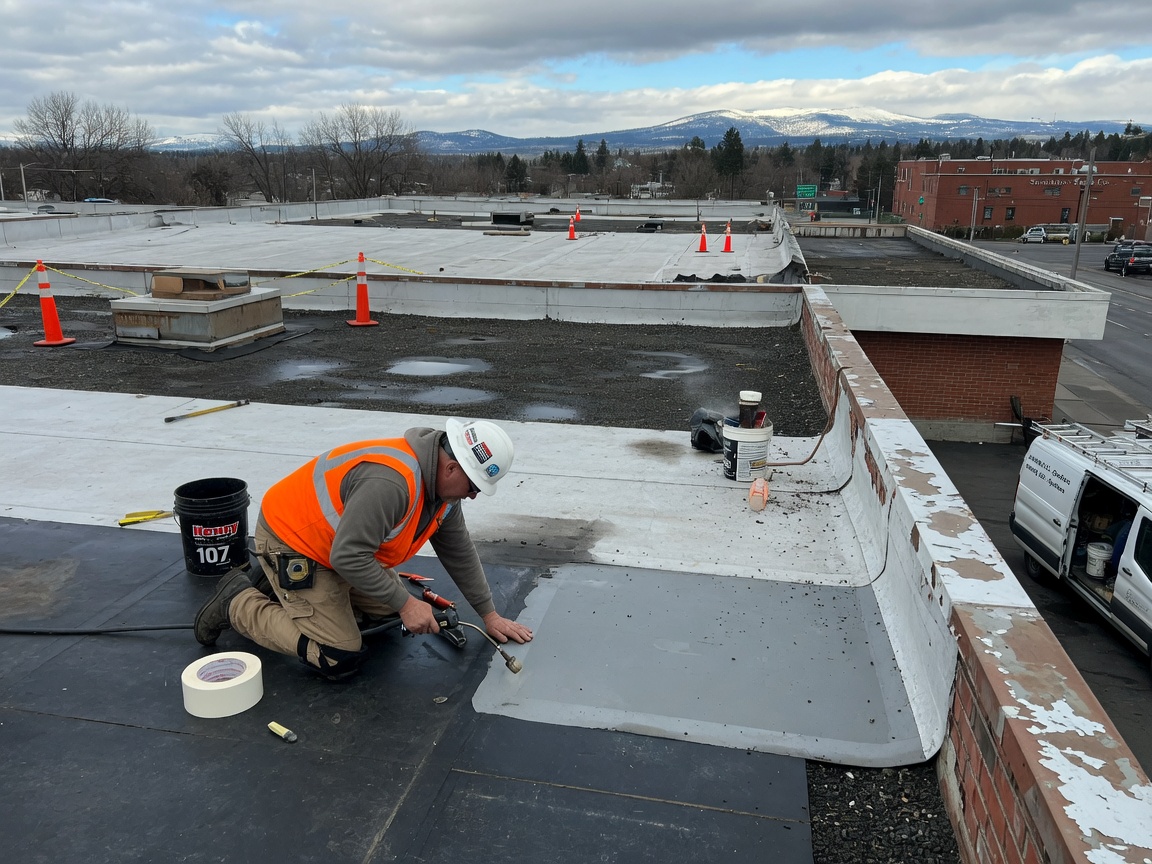
Spokane winters bring repeated freeze-thaw cycles and heavy snow loads that trap water on commercial flat roofs. In neighborhoods such as Downtown Spokane and the Perry District, many 1960s-1980s buildings use TPO or modified bitumen membranes that split along seams when ice expands. Proper repair requires matching the existing membrane type, cleaning to the substrate, and installing compatible flashing that withstands the county's wind-driven snow.
South Hill commercial properties often sit on sloped lots where roof drains tie into older combined sewer lines. When those lines surcharge during spring melt, water backs up under the membrane. Technicians from 2182 E Springfield Ave routinely trace interior leaks to clogged scuppers or failed pitch pockets rather than obvious punctures. Addressing the drainage path before patching prevents repeat callbacks after the next warm spell.
Spokane Valley and Cheney buildings frequently have ballasted or mechanically attached systems that shift under snowplow vibration from adjacent parking lots. Repair crews check perimeter edge details and counterflashing at HVAC curbs, because wind gusts funneled along the Spokane River corridor loosen fasteners that later leak. These inspections occur Monday through Friday 8am–6pm and Saturday 9am–2pm to match building access schedules.
Technician insight
In Spokane the thing that catches most people out with commercial flat roof repair is assuming a visible puncture is the only problem. Snow piles against parapets on South Hill buildings and melts into seams that were never properly sealed during original installation, so we always trace water back to the low points near Riverfront Park or Manito Park rooftops before patching.
Downtown Spokane Office Leak After Heavy Snow
Water entered through a split TPO seam above a second-floor conference room following a January thaw. Inspection revealed the seam had opened where ice had formed against an HVAC curb. Crew welded a matching TPO overlay, cleared the scupper, and added a tapered cricket to improve flow. No further leaks occurred through the remaining winter.
Commercial Flat Roof Repair Services We Offer
✓TPO Membrane Repair
Locates and heat-welds splits or seam failures in commercial TPO roofs before water migrates under insulation.
✓EPDM Roof Patching
Applies reinforced EPDM patches over punctures and aged flashings common on flat roofs in Browne's Addition.
✓Modified Bitumen Restoration
Removes blistered areas and installs new torch-down or cold-process modified bitumen to restore slope and waterproofing.
✓Drainage System Clearing
Clears scuppers, leaders and internal drains that back up during Spokane's spring snowmelt.
✓Flashing and Edge Detail Repair
Replaces deteriorated perimeter metal, curb flashings and pitch pockets around rooftop equipment.
✓Commercial Roof Coating Application
Applies elastomeric coating over existing membrane to extend service life in four-season weather.
Commercial Flat Roof Repair Cost in Spokane, WA
| Service | Typical Range | What Affects It |
|---|---|---|
| TPO or EPDM seam weld repair | $450–$950 | Size of affected area and number of seams |
| Drainage clearing and scupper repair | $300–$700 | Access difficulty and debris volume |
| Perimeter flashing replacement | $650–$1,400 | Linear footage and metal gauge |
| Small commercial patch (under 100 sq ft) | $550–$1,100 | Membrane type and insulation condition |
Ranges are typical for Spokane, WA and confirmed with an exact written quote before any work starts.
How it works
- 1
Site Assessment
Technician inspects membrane condition, drainage paths and snow-load indicators from the roof surface and interior.
- 2
Material Verification
Identifies existing membrane type and selects compatible repair materials rated for Spokane freeze-thaw exposure.
- 3
Targeted Repair
Executes seam welding, patching or flashing replacement while protecting surrounding roof areas from debris.
- 4
Drainage Test and Walk-Off
Flood-tests repaired sections and confirms positive flow before leaving the site.
Pricing
Upfront written quotes after on-site inspection; final price depends on roof height, membrane type and extent of wet insulation.