
2026-09-14 · Tom Riggins
Flat Roof Repair Pricing Factors in Spokane
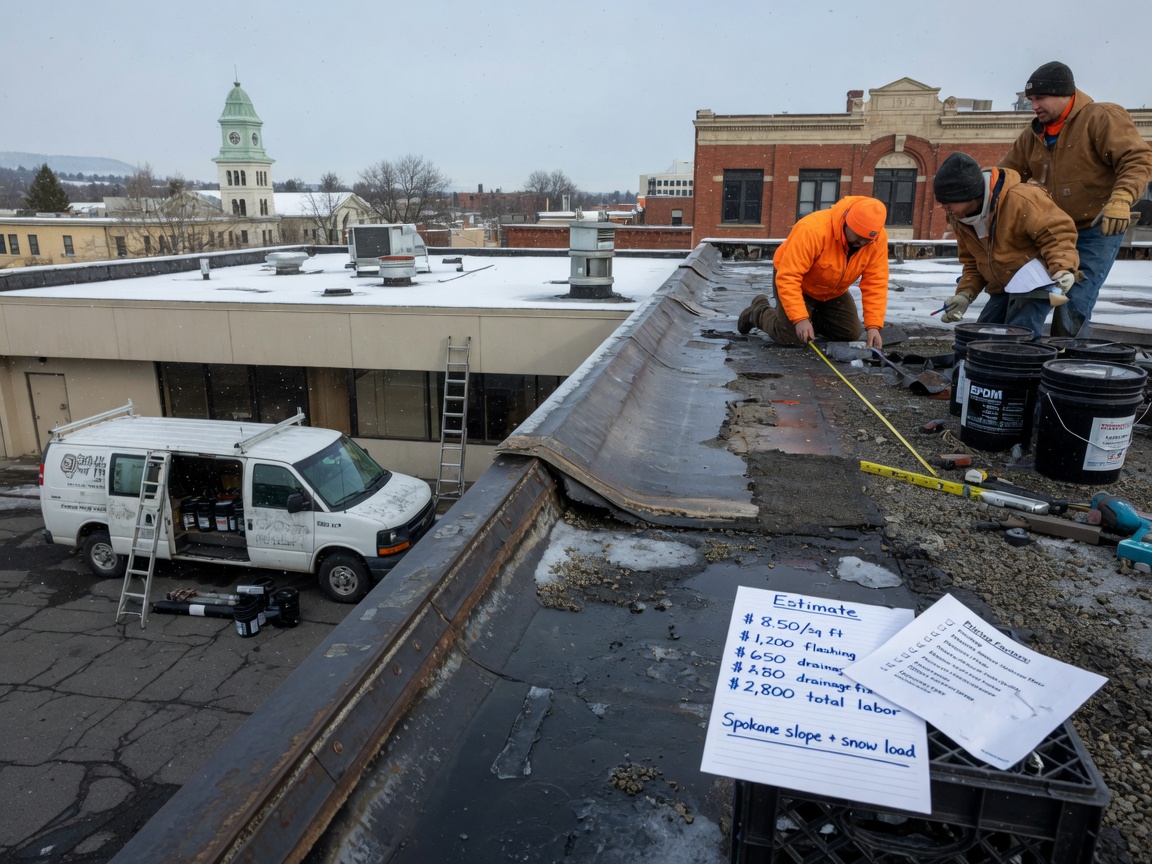
Flat roof repair in Spokane typically ranges from $8–$25 per square foot depending on the factors below, with most residential jobs falling between $1,200 and $4,800 for common damage found on older stock in areas like the Perry District and Downtown Spokane.
Material Type and System Compatibility
Spokane's mix of pre-1970 commercial buildings and mid-century homes often features built-up roofing or modified bitumen systems that require compatible repair materials. Choosing TPO patches over aged EPDM can add $3–$7 per square foot because new seams must match thermal expansion rates during warm summers and cold snaps. Property owners in Browne's Addition frequently need custom color matching for historic aesthetics, which increases material lead time. Labor for these blends runs higher when crews must remove existing gravel ballast without damaging underlying insulation. Selecting the right membrane early prevents repeated leaks near Spokane Falls where humidity fluctuates sharply. Flat Roof Leak Repair crews commonly document these compatibility issues during initial visits to avoid mismatched repairs that fail within two seasons.
Scope of Damage and Inspection Findings
Pricing scales directly with the square footage affected and whether underlying decking has rotted from ponding water common after spring melts. A 200-square-foot blister repair might total $1,600–$2,800 while full-section replacement on a 1,000-square-foot commercial roof in South Hill can reach $12,000–$18,000 once insulation and fasteners are addressed. Inspectors check for hidden moisture using infrared scans, especially on buildings near Manito Park where tree cover traps snow. Larger damage patterns tied to wind-driven rain events often require Inspecting Flat Roofs After Spokane Wind and Rain Events before accurate quotes are issued. Minor surface cracks cost less than full membrane delamination that exposes the substrate to Spokane County's freeze-thaw cycles.
Seasonal Weather and Snow Load Pressures
Four distinct seasons drive scheduling and material choices. Winter snow loads in Spokane County add urgency and sometimes overtime rates when crews work on roofs in Lincoln Heights or Moran Prairie before heavy accumulation. Cold temperatures below 40°F limit adhesive application windows, extending project timelines by two to three days. Summer heat allows faster curing but demands UV-stable coatings that resist Spokane's intense sun. Properties near Riverfront Park face additional wind exposure that accelerates edge deterioration. Managing Snow Load on Flat Roofs During Spokane Winters outlines reinforcement options that can reduce future repair frequency. These seasonal constraints directly influence whether repairs occur in shoulder months when labor availability improves.
Access, Pitch, and Drainage Realities
Many flat roofs in Cliff-Cannon and Audubon-Downriver sit above tight urban lots with limited crane access, raising equipment rental fees by $800–$1,500 per job. Low-slope designs that trap water near drains require targeted slope correction using tapered insulation, adding $4–$9 per square foot. Drainage repairs around scuppers and internal leaders become more complex on multi-story buildings where safety tie-offs and scaffolding are mandatory. Crews based at 2182 E Springfield Ave routinely factor travel time to outlying spots like Spokane Valley or Cheney when quoting same-day mobilization. Proper pitch restoration prevents recurring ponding that shortens overall roof life in the region's variable climate.
Replacement Versus Targeted Repair Decisions
When damage exceeds 30% of the surface or the existing system nears its 15–20 year expectancy, full Flat Roof Replacement often proves more economical than piecemeal fixes. Spokane homeowners compare repair quotes against replacement costs that average $12–$28 per square foot installed. Coated systems can extend service life by 8–12 years at lower upfront expense than complete tear-offs. Owners in Rockwood and Manito frequently choose hybrid approaches that repair high-traffic sections while recoating the balance. Accurate assessment prevents over-repairing sound areas or under-treating widespread deterioration from decades of freeze-thaw stress.